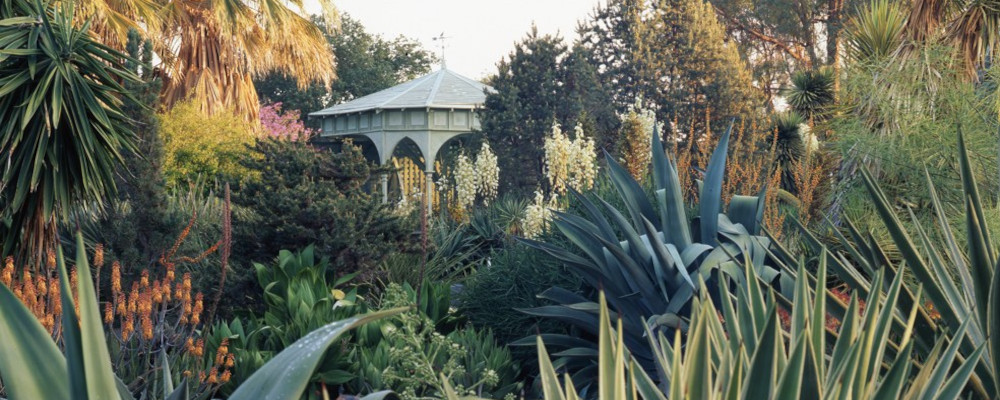
There is a celebration of Brian Kemble’s 45th year working with the Ruth Bancroft Garden [RBG] this month (September 2025). This event got me trying to recall the first time I met him, as well as ‘dusting off’ notes I’d been making to create a post about this significant local garden and its history.
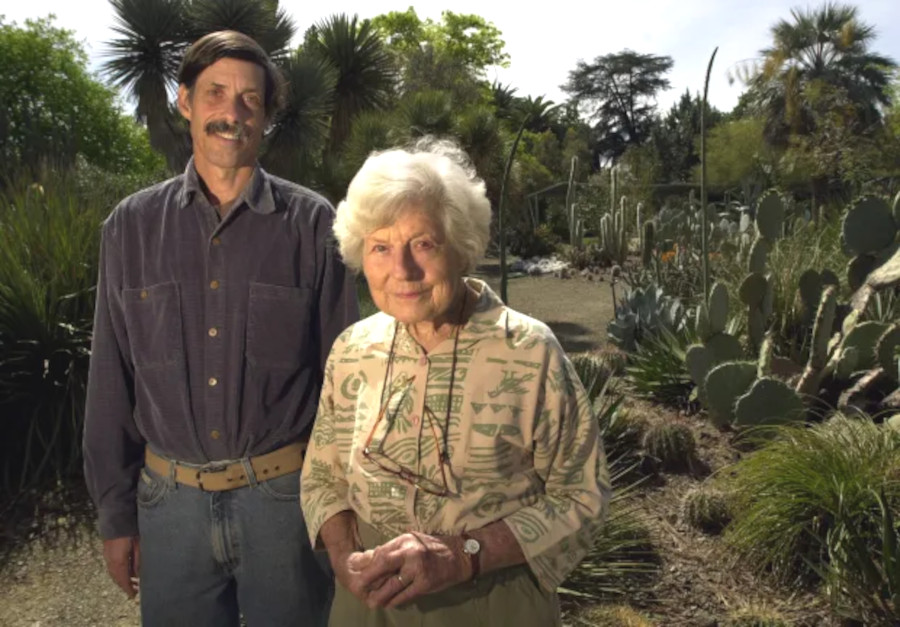
Brian’s introduction to Ruth came in 1979, when he first visited her garden alongside Clive Innes, a speaker for the Oakland chapter of the Cactus and Succulent Society, where Brian served as vice president. Ruth hired him part time in 1980 to tend plants in the newly created shade houses in her garden. During his tenure, he has proved invaluable to the project, expanding the plant collection and producing interesting hybrids.
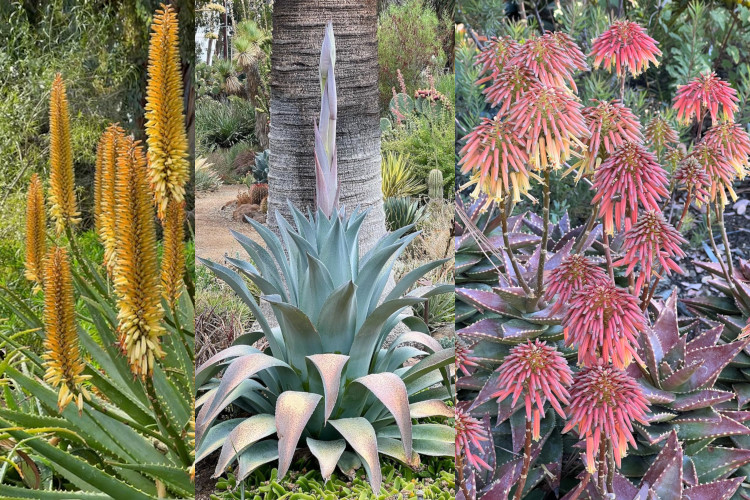
For the last decade, Brian has been working with Assistant Curator Walker Young. As a Curator team, they have been helping to involve the RBG in various projects with University of California, Davis and other groups, to test the hardiness of Aloë hybrids and their adaptability to garden use.
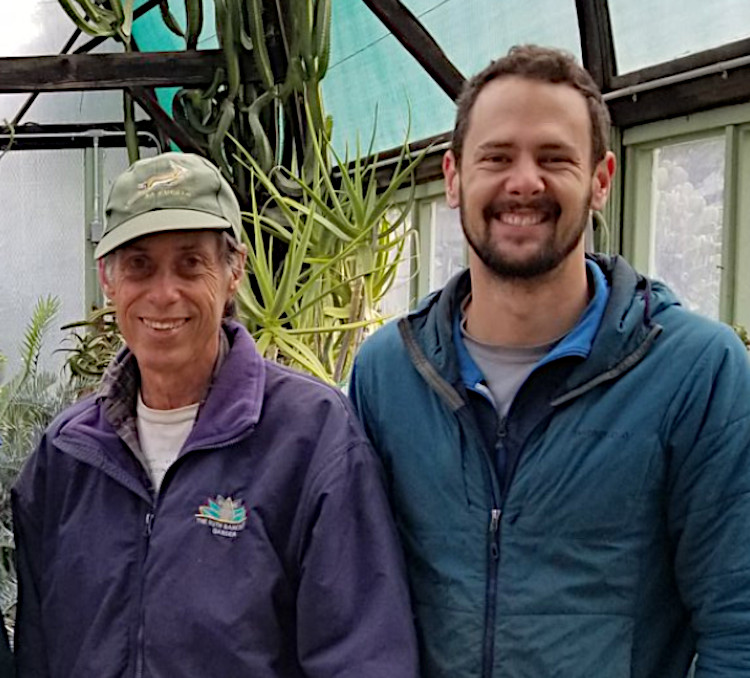
Brian had already become a feature of the garden when I met him (more on that in a bit), but first …
I Can’t Resist Some Research
In the 1980s, I started working for the California Digital Library, a department of University of California. So I was well aware of that there was a rare book library named for Hubert Howe Bancroft (1832-1918). It was created in 1905 to house his books, manuscripts, and collected item he had used to write extensively about the history of California and North American West.
I uncovered that Ruth Margaret Petersson (1908-2017) married Philip Bancroft Jr (1911-1983), Hubert’s grandson, who had inherited the 400 acre family farm through his father in Ygnacio Valley, Contra Costa County, California. Before 1970, much of that property was sold to developers to expand the town of Walnut Creek. In 1971, Philip had the last remnant orchard removed from around the house. He then offered the ground to Ruth who was already quite interested in plants and horticulture. This was the start of Ruth’s garden.
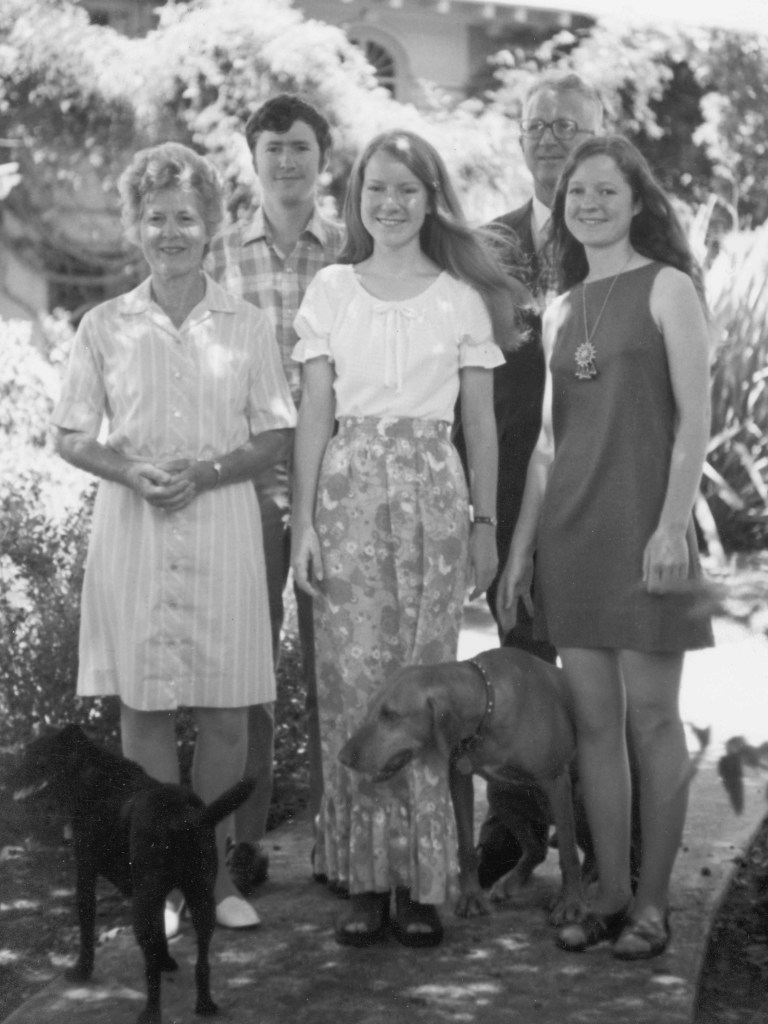
Ruth had studied architecture, though such a career for a woman turned out to be impossible after the Wall Street crash of 1929. She was also artistic and an avid collector. Her sea shell collection, along with very detailed information about where it was collected and the date – showing how those species changed location over time – now resides with the California Academy of Sciences! Ruth brought this same detailed record keeping to her plant collections and the creation of her garden.
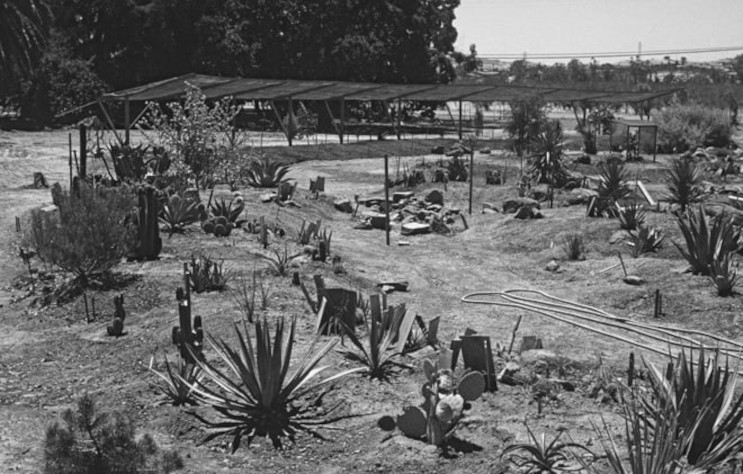
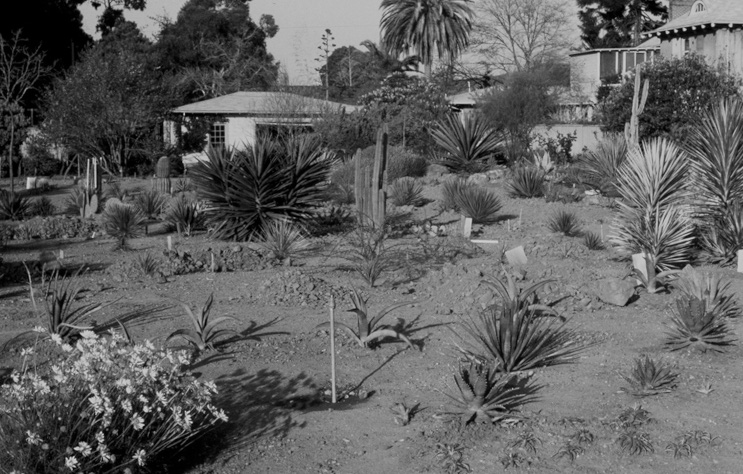
I recall that Lester Hawkins (1915-1985) of Western Hills Nursery had also worked with Ruth creating the garden layout (maybe I had read about this in a Pacific Horticulture magazine issue during this time?). Ruth had said that she followed Lester’s initial lead, but her own creative skills built the handsome plantings over time.
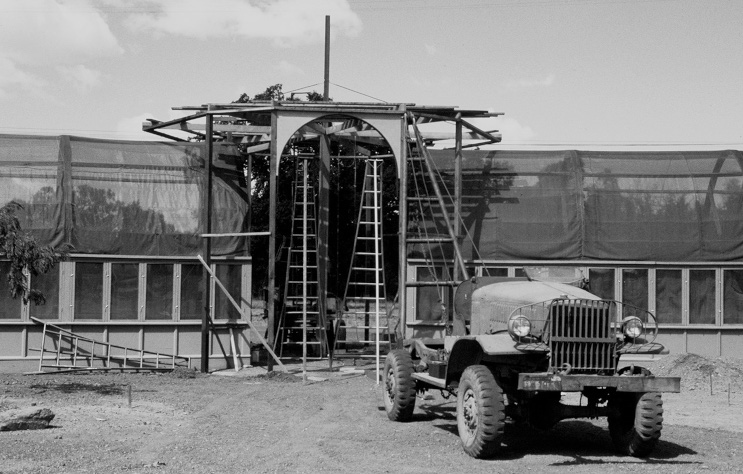
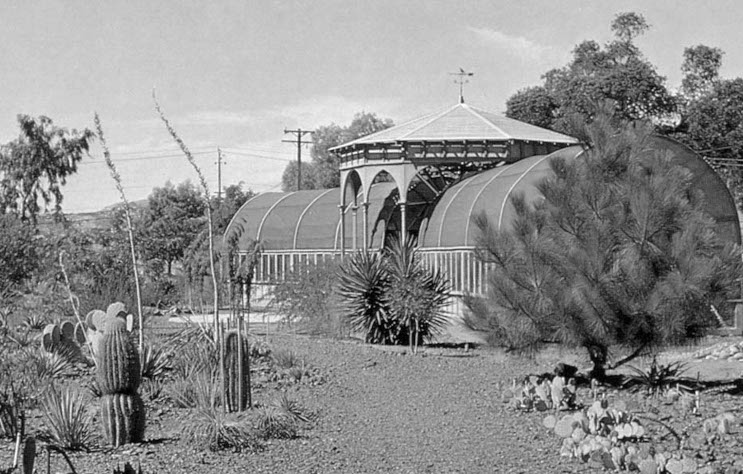
Philip built two shade houses, according to Ruth’s wishes, adjacent to the house driveway. Ken Householder, an architect friend who they knew from attending the SF Opera, designed a pergola/gazebo to connect them, which Philip built according to his specifications. The structure, which came to be know as ‘Ruth’s Folly’, dominated the early garden.
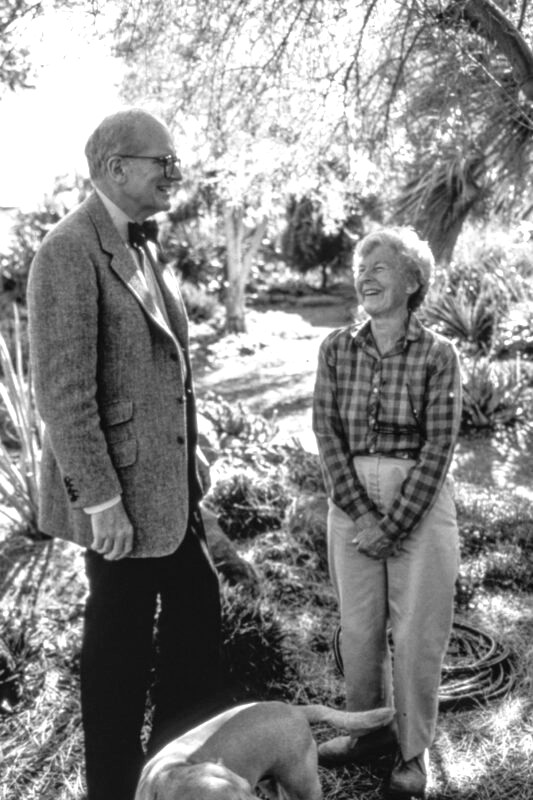
Active in the local horticultural societies, Ruth regularly attended meetings around the Bay Area. Wayne Roderick (1920-2003) wrote candidly about his experiences with Ruth at these meetings and elsewhere in his introduction to Ruth’s Oral History (UC Berkeley California Horticulture Oral History project).
Somewhat by chance, self proclaimed ‘horticultural enthusiast’ Frank Cabot (1925-2011) and his wife Ann visited Ruth during a trip to California for a conference. Both were captivated by the unique character of this dry garden. Ruth expressed concern that she was uncertain about the garden’s future. Out of the meeting, Frank launched an effort to create the Garden Conservancy, with the RBG to be the pilot project.
Frank talks about meeting Ruth in his introduction to Ruth’s oral history.
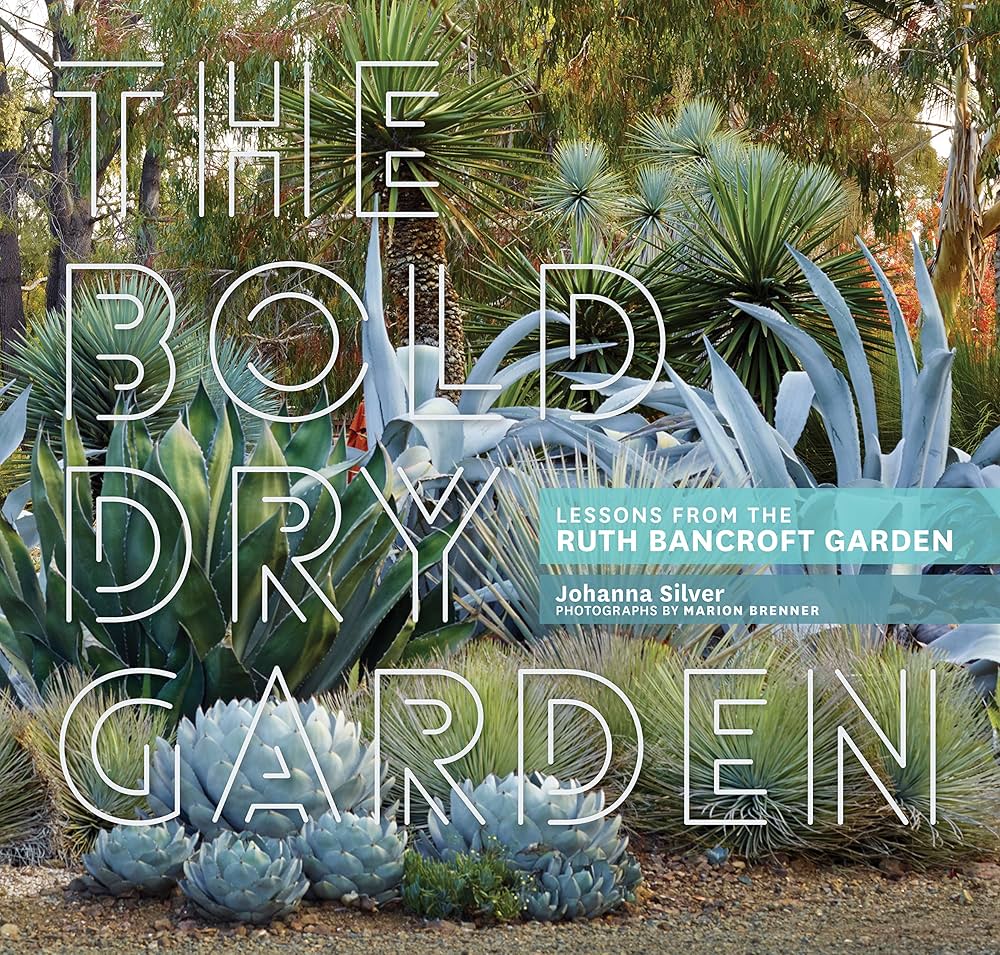
BTW – There is a book that details the history of this garden: The Bold Dry Garden, Lessons from The Ruth Bancroft Garden; Johanna Silver (Author) & Marion Brenner (Photographer); Timber Press 2016; ISBN-10:1604696702, ISBN-13:978-1604696707.
My Own Participation in the RBG
In the very early 1990s, our friend Richard Turner asked if I would like to be involved in a project to conserve Ruth’s garden. I was quite intrigued. When he told me that a new organization – The Garden Conservancy – had been created for this effort, I was even more so!
The various committee meetings are a blur at this point, but I do remember enjoying seeing Richard in action as director of the project! As these took place in her home, Ruth was also an active participant, serving us lemonade and cookies and being a gracious host. Richard had expressed interest in my participation because of my drawing skills (they were going to need branding, a logo, etc.), so I always made sure I had my camera (this was before cellphones) & and sketchbook to use as well as my notepad.


Some of my time on the property was spent walking around the garden grounds, getting a feel for its character, and taking photos to inspire graphic content. A special treat was watching Ruth purposely come and go from various corners, sometimes planting, sometimes taking notes. She had volumes of bound notebooks in which she had recorded everything she had purchased, then planted, and its growth progress over time! This unusual historical record was part of what made conserving this garden important.
One day while I was taking photos of the garden, I stopped to admire an Echeveria growing beneath the shade structure. Suddenly I noticed Ruth at my side – “Isn’t that a lovely one!” she said. I agreed and she told me about visiting plant breeder Ed Hummel. She had spotted this plant among some others and asked him about it. He said that the group was all destined to be composted since they did not have the qualities he was looking for (I’m sure you already guessed that many of these came home with Ruth!).
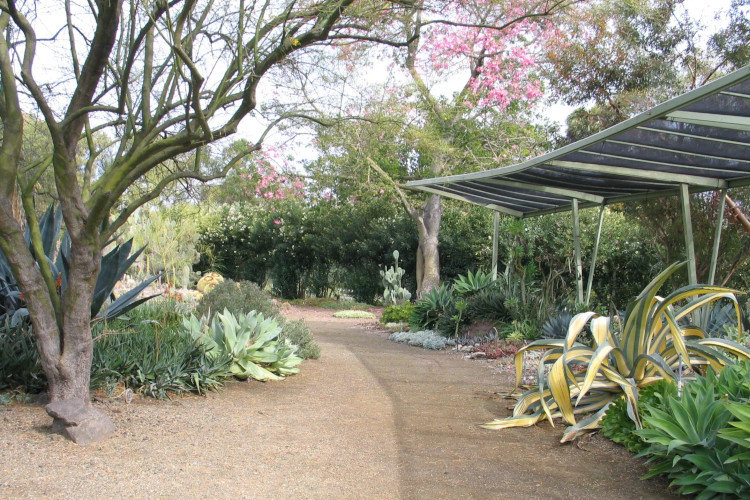

At the end of her story, she reached down and pulled a large rosette up and handed it to me to take home!! We’ve treasured it ever since.
In early 1990, access to the garden was via the driveway to the house on the north side of the property. We would park by the two shade houses and enter through the ‘Ruth’s Folly’. Its significant presence in the garden, it seemed by all accounts, appropriate to use for the original logo design.
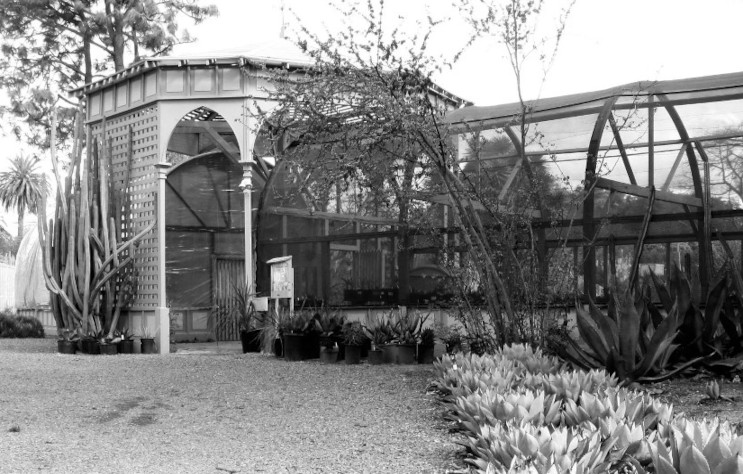
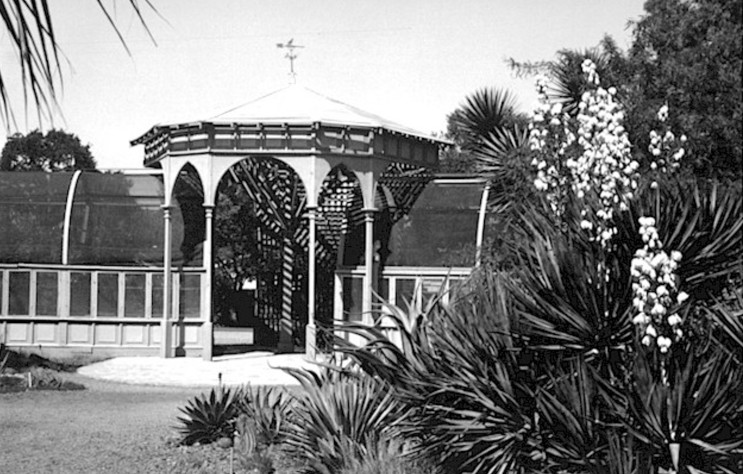
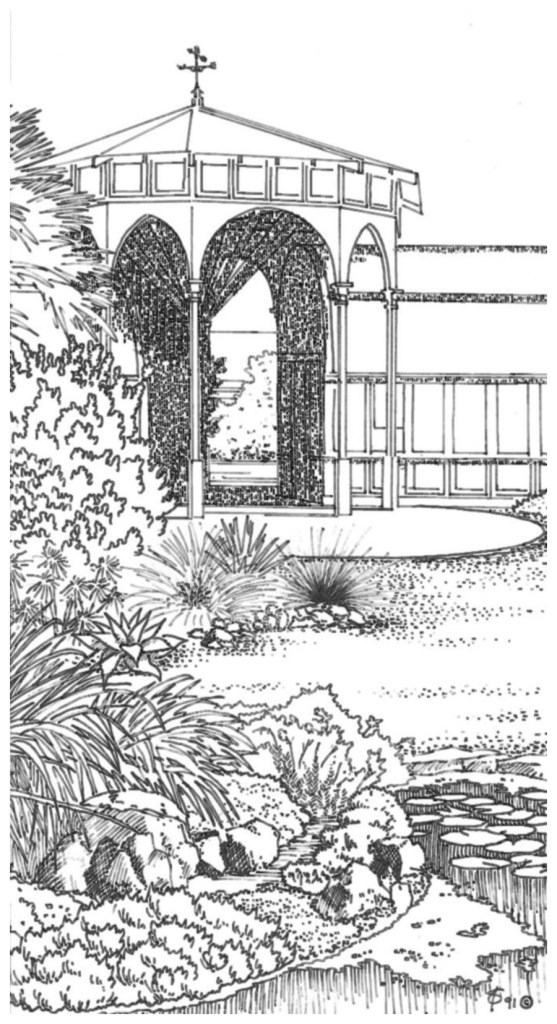
I did a number of drawing of the ‘Folly’ from different angles to find one that seemed most appropriate for how the logo would be used.
At this time, websites were not yet a thing, and public email did not really exist, so the logo I created appeared primarily in print media.
While there were many possible alternatives, I liked this view as it featured the garden as well as the concept of the ‘Folly’ being the entrance.
Some samples of the completed logo and how it was used in print media …
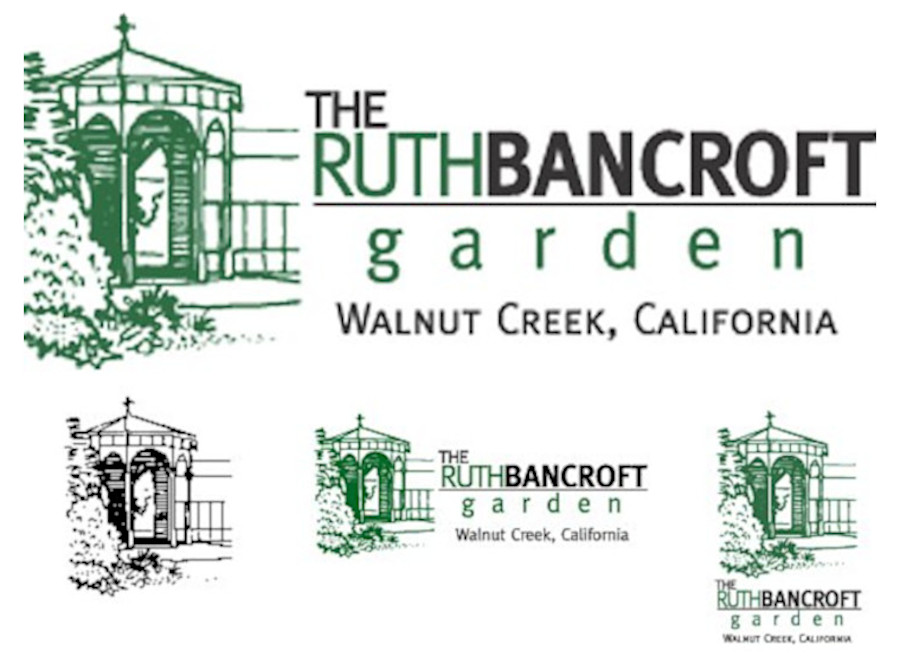
I was very pleased to have participated in the start of this wonderful garden, and happy to see it continue to grow and evolve over time.
Years later, in 1998, after I was no longer directly involved with the project, I noticed that this original logo now also appeared on the first RBG web page (where is stayed into 2006).
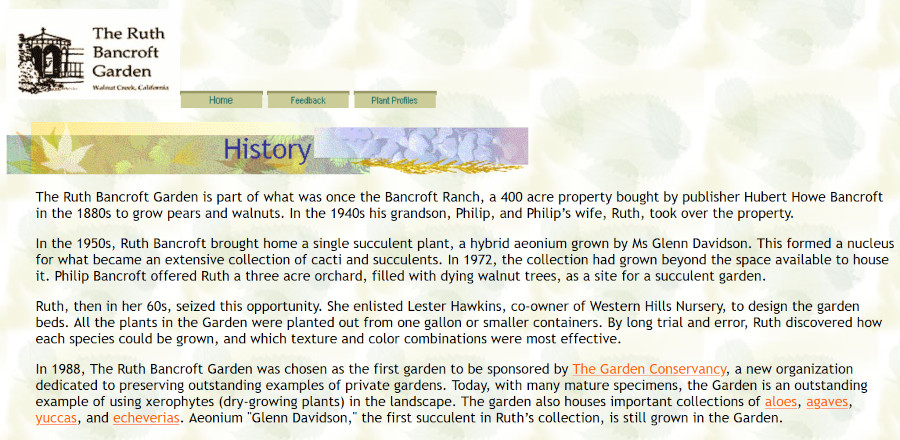
There was apparently a brief period of transition where temporary logos had short lives or no logo was evident at all. The garden was maturing and changing significantly. The entrance and focus of the garden shifted to the other side of the property, with the ‘Folly’ now at the back. And the graphic demands of the Internet obviously required something different.
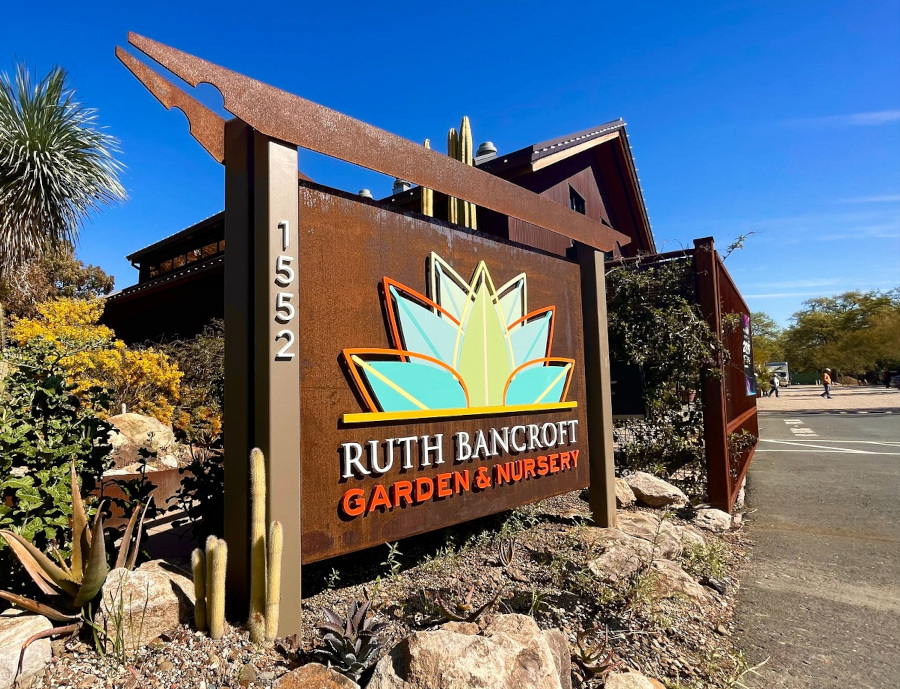
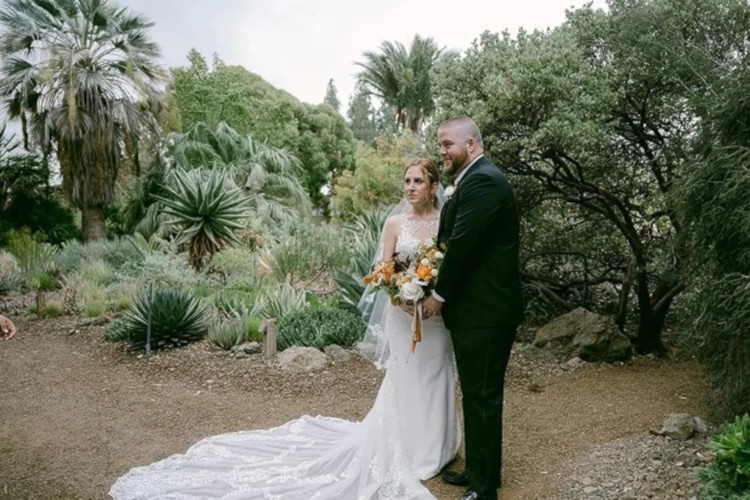
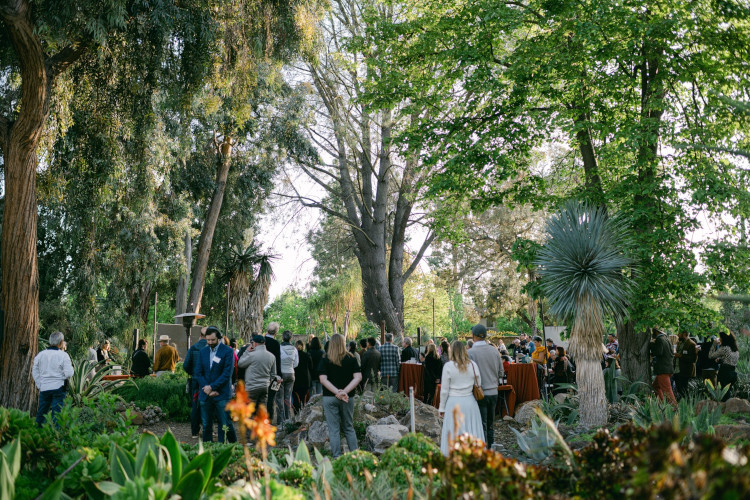
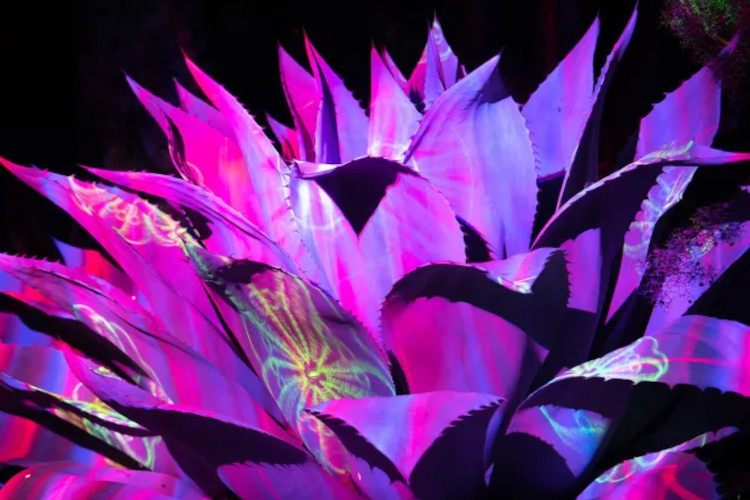
One thing that continues to impress me about the RBG is how it engages with the local community. Various types of events are encouraged (weddings, meeting, art, education, children’s story-time, etc.).
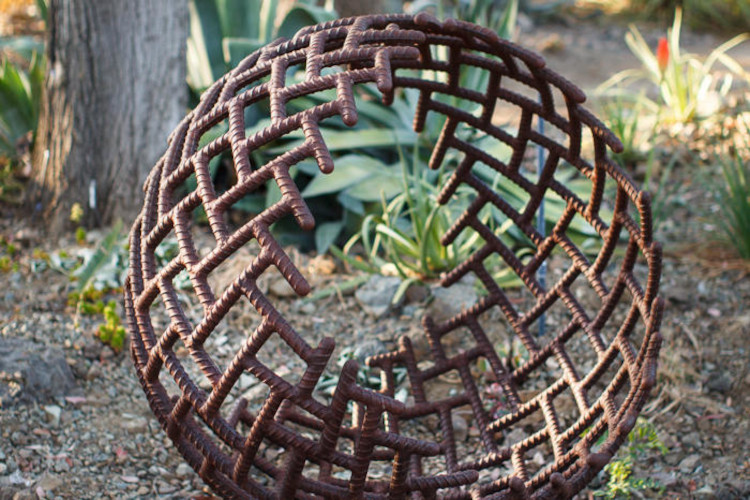
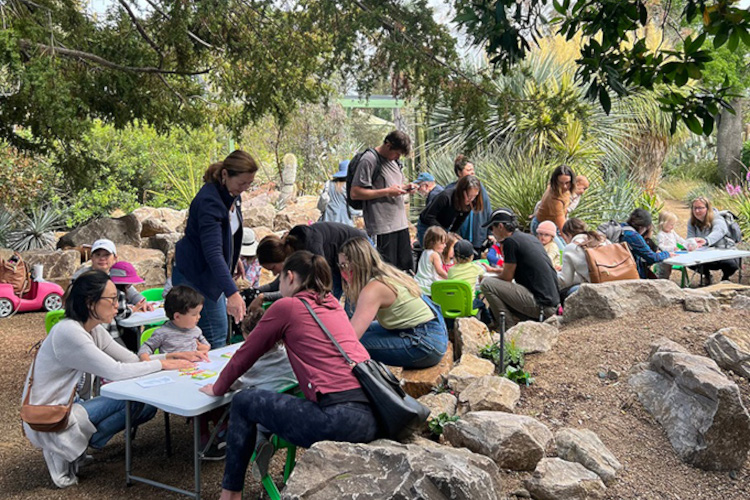
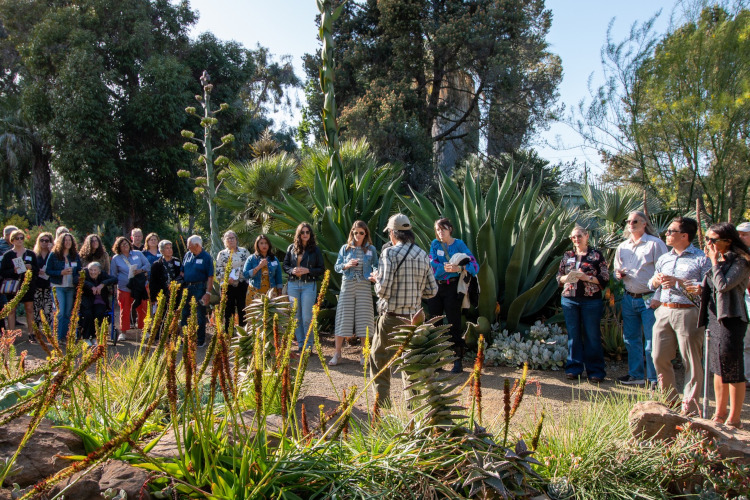
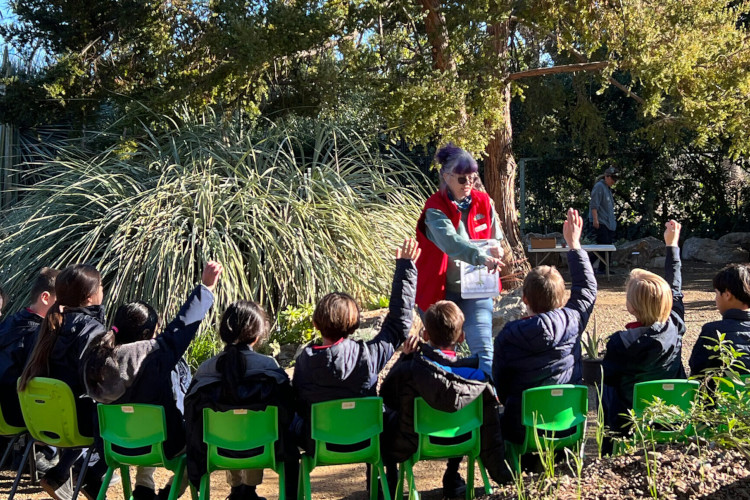
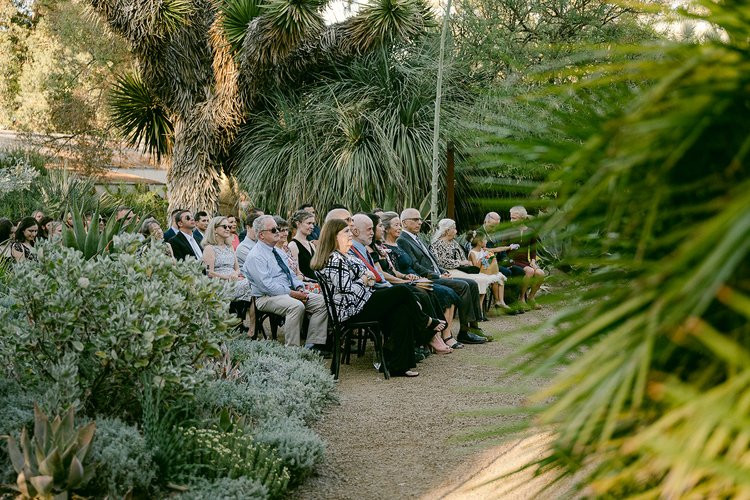
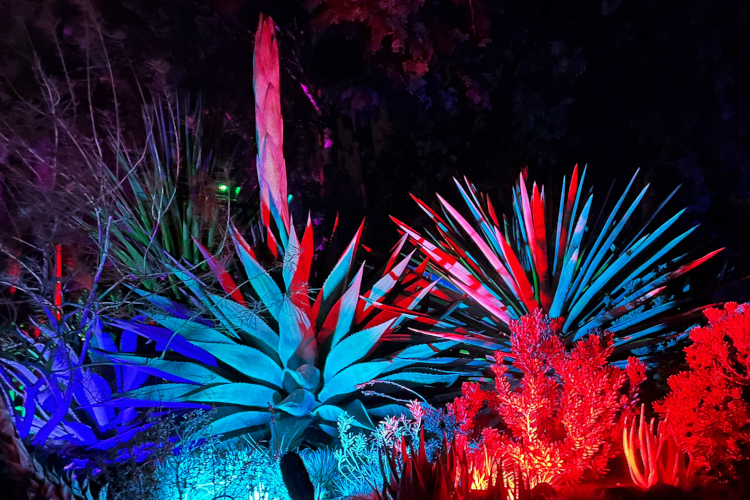
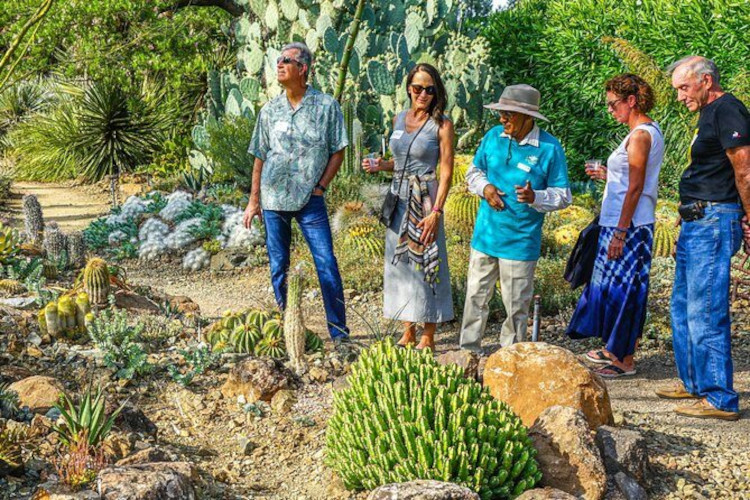
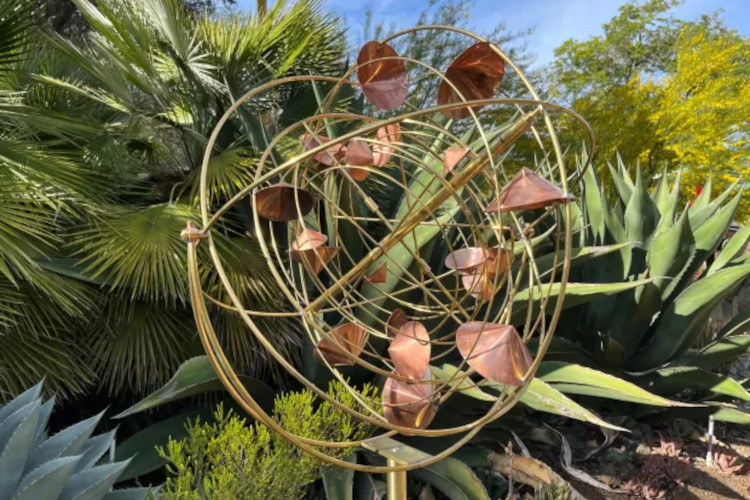
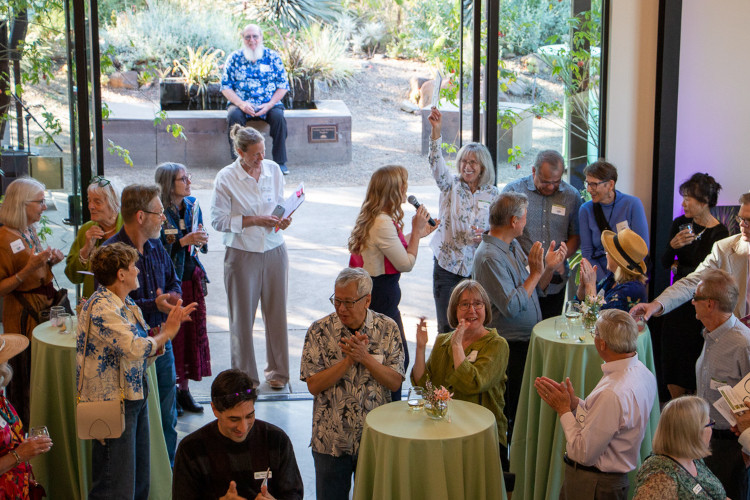
Even in the creation of the garden infrastructure, the community was engaged – as in the case of two mosaic walls that are now permanent (to read more about this project, see participant Cindy deRosier’s blog post).
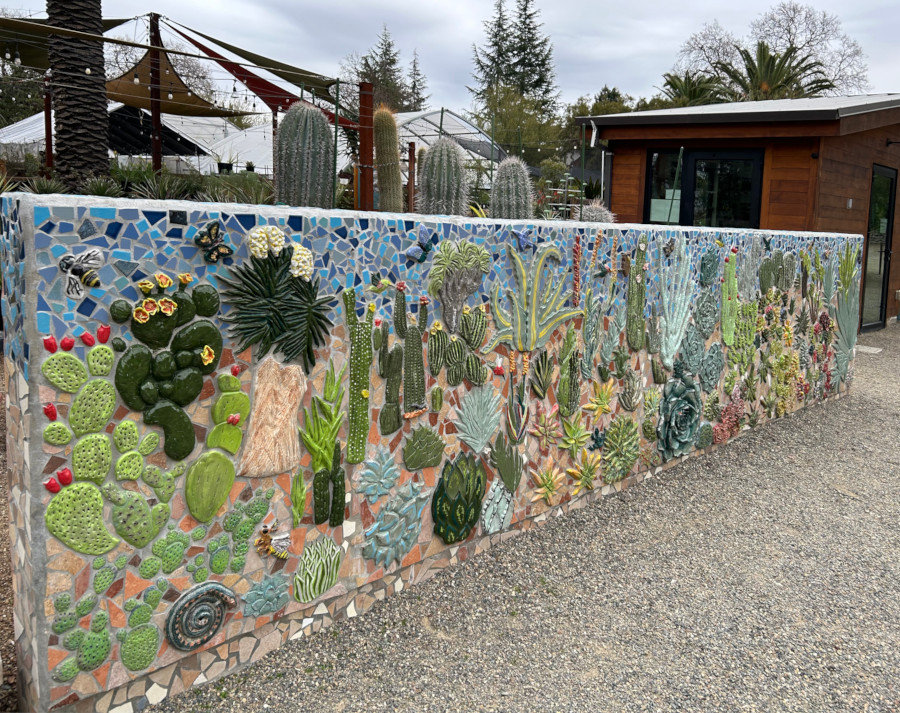
I am sure that Ruth was pleased to see her garden creation taking on a life of its own as she advanced into 100th year of life. Her gift to the community has been very well received and will continue to enrich and educate.
References and Links
(*Information retrieval date for the URL mentioned)
Celebrating Curator Brian Kemble, Ruth Bancroft Garden, September 2025, https://www.ruthbancroftgarden.org/history-brian-kemble/ (*September 2025)
The Aloe Hybrid Breeding Project, Curator’s Column, Ruth Bancroft Garden, https://www.ruthbancroftgarden.org/garden/curators-column/ (*September 2025)
Ruth Bancroft, Wikipedia, https://en.wikipedia.org/wiki/Ruth_Bancroft (*July 2025)
History, Ruth Bancroft Garden, https://www.ruthbancroftgarden.org/history/ (*August 2025)
Ruth Bancroft, California Horticulture Oral History Series, The Bancroft Library, University of California, Berkeley, https://www.ruthbancroftgarden.org/wp/wp-content/uploads/BancroftRuth_OralHistory.pdf (*June 2025)
Hubert Howe Bancroft, Philip Bancroft, Sr. and Philip Bancroft, Jr
https://calisphere.org/item/ark:/13030/tf8779p3gz/ (*June 2025)
The Works of Hubert Howe Bancroft, Online Books,
https://onlinebooks.library.upenn.edu/webbin/metabook?id=worksbancroft (*June 2025)
The Bold Dry Garden, Johanna Silver (Author) & Marion Brenner (Photographer); Timber Press 2016; ISBN-10:1604696702, ISBN-13:978-1604696707,
https://www.ruthbancroftgarden.org/product/the-bold-dry-garden/ (*July 2025)
Ruth Bancroft Obituary, Legacy, https://www.legacy.com/us/obituaries/eastbaytimes/name/ruth-bancroft-obituary?id=7964056 (*August 2025)
The Ruth Bancroft Garden, Pacific Horticulture, https://pacifichorticulture.org/articles/ruth-bancroft-garden/ (*June 2025)
Bancroft Garden Mosaic Mural, My Creative Life, Cindy deRosier, https://www.cindyderosier.com/2016/08/bancroft-garden-mosaic-mural.html (*August 2025)
 gardening in mediterranean climates worldwide