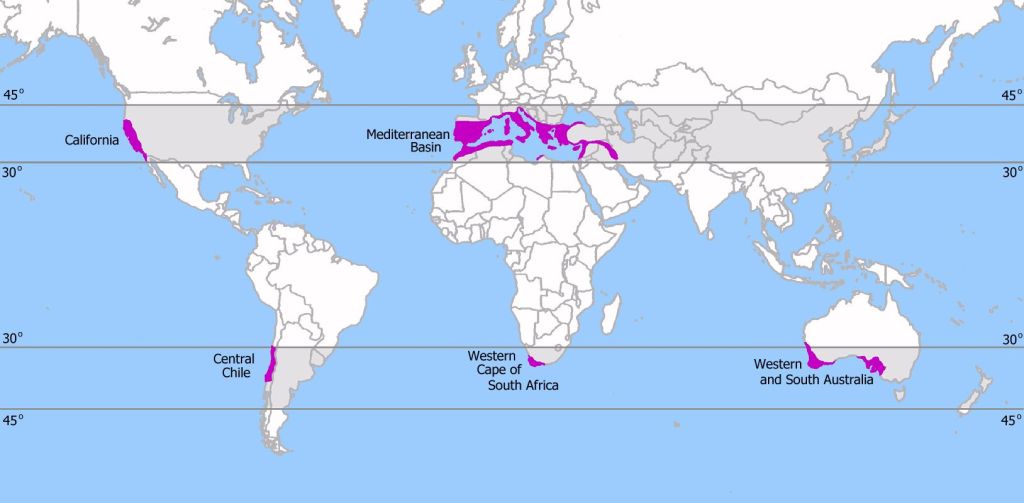
Please note that when the mediterranean cimate is mentioned on this blog, it is always in lowercase. This is intentional, separating it from discussion of the Mediterranean Region itself, Mediterranean culture, style, etc.
Official classifications may vary slightly, but the above map shows what is generally accepted as the mediterranean climate areas. Climate change is certainly making other regions feel more ‘mediterranean’ these days – perhaps a good reason to better understand this climate. ‘Summer Dry‘ is a term that some today think is less confusing (I know the proponents of this concept), but there are a number of climate designations that are dry in summer but very different in other aspects during their their seasonal year). Using that concept also cuts those who are using a (Google) search oft the vast wealth of information available to those who look for ‘mediterranean climate’.
So, this blog adheres to the long established classification named in honor of the largest region, the Mediterranean Basin itself, which is linked to a rich amount of information beyond the fact that our summers are dry. While this blog is based on my own experience in this local climate expression in the SF Bay Area of California, we are also members of the International Mediterranean Garden Society and visit other regions with mediterranean climates routinely. Our visits to other branches of this Society inform us personally and demonstrate both the similarities and uniqueness of of region.
Just over 2% of the earth’s surface, the mediterranean climate regions are none-the-less often considered desirable places due to their mild winters and large number of sunny days (some boast over 300!). Because of the latter, the annual rainfall totals are low. In most regions, rain is scarce or non-existent during the summer months are dry (a full ½ of the year in California, where I am located). There is a lot of variation depending upon latitude and the local topography. E.g. – the South of France extends farther north than most regions because of mountains that protect it from the continental climate (Pyrenees, Massif Central and the Auvergne, French Alps).
Traditionally, those coming from other, colder winter climates consider mediterranean climates to be a tropical paradise, only lacking water which, of course, can be supplied by various engineering and/or technical means. Today, it has become evident that this is largely unsustainable, as well as not as effective as originally thought. Plants from summer rainfall regions don’t fully accept our dry air and supplemental water and often fail to thrive even under expertly modified conditions.
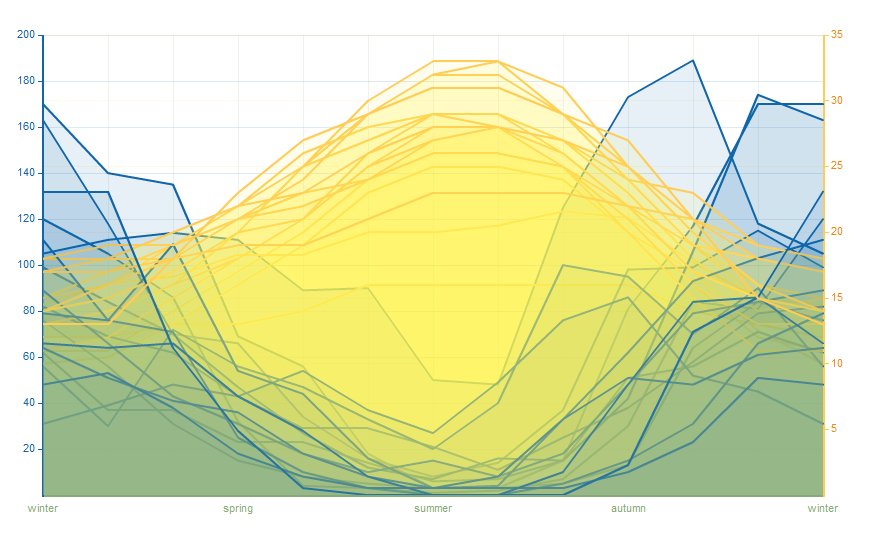
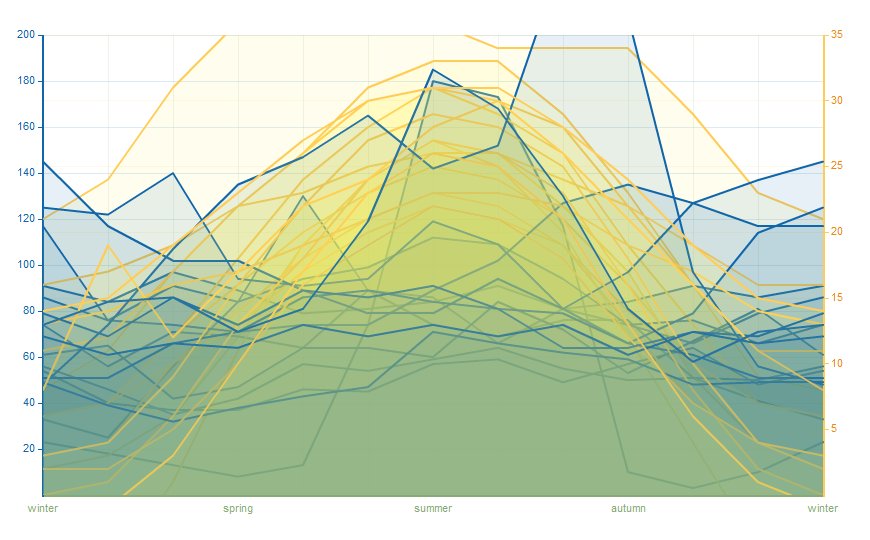
Perhaps surprisingly, mediterranean climate regions hold approximately 20% of the earth’s known plant species, obviously adapted to these conditions! Many of these plant species are already in our gardens and will continue to grow on their own even when neglected by gardeners. Many more have not been adequately tested in gardens or for their potential.
Raising the awareness of this unique climate has been an interest of mine for many years now. Anyone admiring in the plants and landscapes of mediterranean climate regions may find this blog of interest but its main focus is helping gardeners in the world’s various mediterranean climates understand their conditions and provide ideas and direction.
Since this site was first built, there was scant information available on the Internet. Today, fortunately, this is very different! But, like anything in our information age, it can be daunting to find good, clear material. The following links are some I have found informative:
What is a mediterranean climate?, Heidi Gildemeister, The Mediterranean Garden Society, https://www.mediterraneangardensociety.org/climate.html
Gardener’s Guide to the Mediterranean Climate, Lester Hawkins, Pacific Horticulture, https://pacifichorticulture.org/articles/gardeners-guide-to-the-mediterranean-climate/
Mediterranean climate, Wikipedia,
https://en.wikipedia.org/wiki/Mediterranean_climate
Mediterranean Climate, Science Direct, a collection of articles, https://www.sciencedirect.com/topics/agricultural-and-biological-sciences/mediterranean-climate
Mediterranean-Climate Ecosystems, Natural Reserve System – University of California, a series of informative videos, https://ucnrs.org/information/videos/mediterranean-climate-ecosystems/

 gardening in mediterranean climates worldwide
Leave a comment