PART II
As I mentioned in PART I of this story, I became aware of this ‘dusty miller’ through an interaction with Mr. Kovac. Previously, I’d not really given gray leafed plants much notice as they seemed to have limited use in garden (based on the plantings I had seen locally).
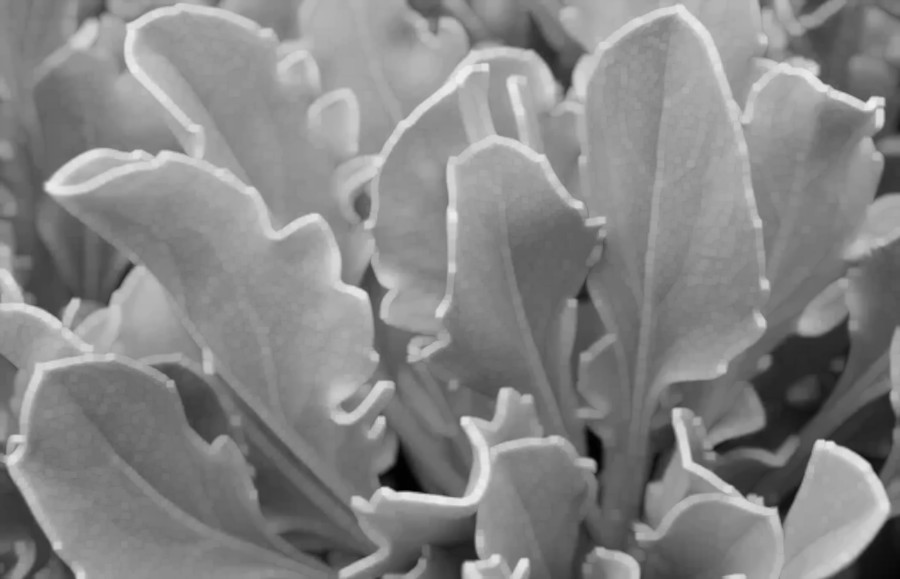
But I always have always been drawn to a ‘puzzle’ – in this case, two unique plants with similar appearance. And my boss at the nursery was seemingly unaware that a different plant had crept into his regular nursery stock. I was excited to have my job at the nursery, hoping to learn a lot. That there was no immediate answer to this situation was surprising to me!
I was just a teenager in high. Since taking a Biology class, I became excited about Botany specifically and tried to read whatever I could. I had acquired a personal copy of the ‘Sunset Garden Book‘ which had become my trusty plant reference.
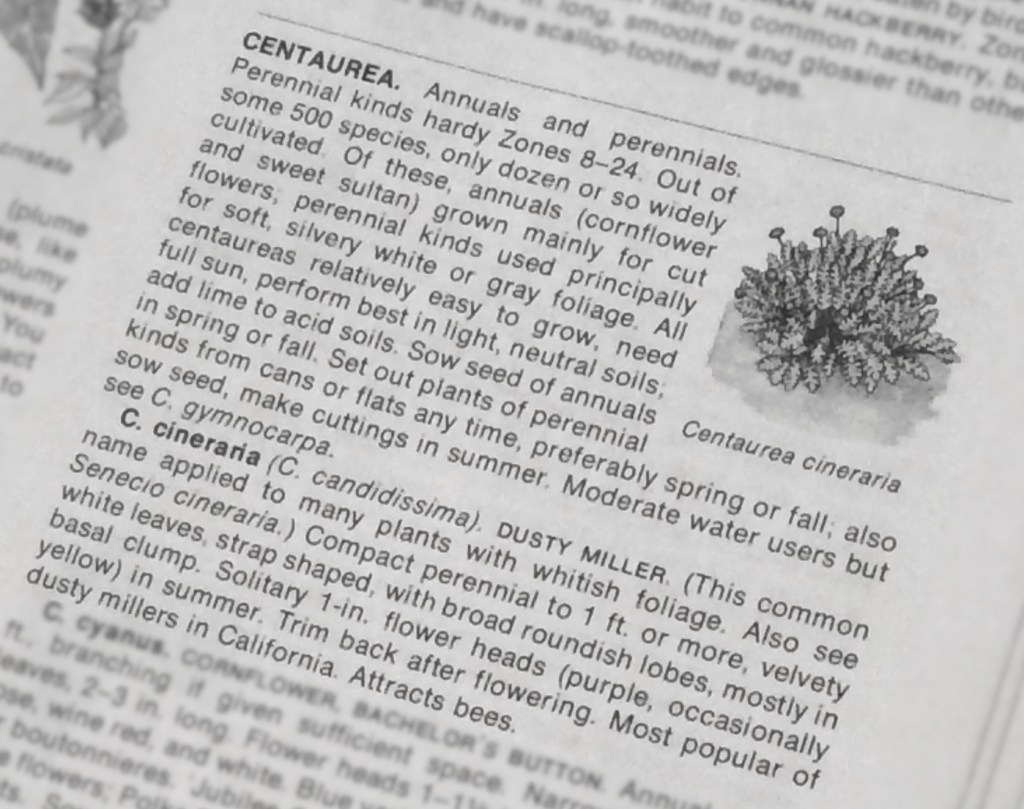
In reading this brief (and somewhat vague entry), I was intrigued that there might be a purple flowered form of Mr. Kovac’s yellow flowered plant! It also referenced Senecio cineraria (now known as Jacobaea maritima), which turns out to be the ‘new’ dusty miller Mr. Kovac complained was “not the right one” in PART I of this article. (C. gymnocarpa is also mentioned, which I also came to learn a lot about in the years to come.)
This was scant information which only intrigued me more. Since it was 1970, the public Internet did not yet exist, so the main source of information you did not know was a Library. Fortunately, There were a few good libraries close at hand for me to browse.
I had regularly visited our town’s new Library – was quite impressive by the standards of the time – since it was within walking distance from my (parent’s) home. When I next had a moment to visit this collection of books, I made a point of looking for plant references. I learned that ‘dusty miller’, as a common name, was quite ambiguous and might refer to several different species or both plants and insects!
It was surprising to read that there were various plant and animal species given the common name of ‘dusty miller’! I recorded any Latin names mentioned (since I also learned that this information would be more accurate) and starting to research them individually during my next visits. So began my descent down the ‘rabbit hole’ …
The etymology of the common name ‘dusty miller’
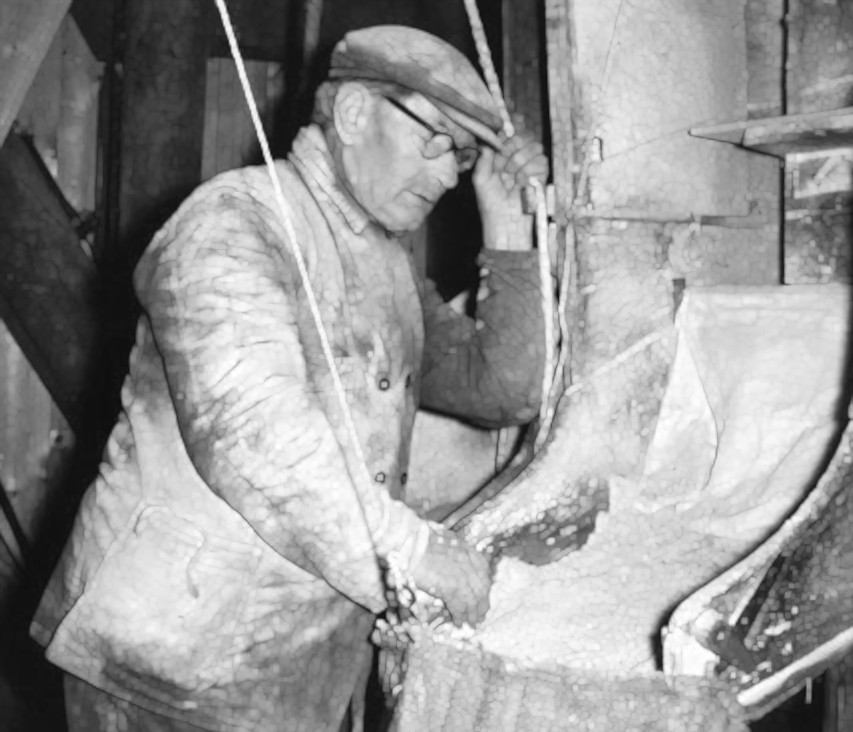
Common names are often regional in origin, and their true origin can become obscured over time. Flour millers were common members of many local towns in past centuries, and their work meant that those trades-persons were often covered in fine white dust from the milling process (on reading this you might be, as I was, shocked not to think of it yourself!).
If nothing else, this exercise showed me how much I enjoy research (when there is adequate reference material). I soon exhausted all the books in our large new city Library. Having gone to a grammar school across the street from the University of Santa Clara (where my father did his graduate work), I wondered about their Libraries. I knew that campus well and thought I might the Library location location.
I guess I looked older or more mature than my age (I was around 15), because no one took notice of me entering a college library. Their book collection was so much more extensive than any public Library I had visited! Since I had no official status to be there, it was pointless to attempt to get a library card, so I merely browsed books during my many visits.

I came to realize during this time that Centaurea cineraria was a species somewhat randomly applied to various different plants. And some of these plants had PURPLE flowers instead of yellow! This was a turning point. How could published references contradict each other, and also show photos of obviously different plants placed right next to each a page, but captioned with the same name! Errors that were obvious to me had made it through the publication and printing process!! How could this be? I had relied on these works to provide me with factual information!
I stayed away from Libraries for a bit after this realization. But my interest in plants never waned. I continued to grow a few cuttings of Mr. Kovac’s dusty miller for a number of years. I came to see that the form I was growing tended to get ‘leggy’ and sad looking rather quickly, but responded well to being propagated by cuttings. As I learned more about horticulture, I came to understand that this might actually have facilitated nursery production of new plants to sell (in spite of being less long-lived).
Eventually, life changes such as college, marriage, and the various living relocations I made, I lost Mr. Kovac’s plant but never forgot the experience. I especially thought of it when I started to do horticultural consulting (as a sideline from of my ‘regular’ jobs). Asking clients about any personal connections to the plants they grew was very informative and helped me help them to succeed.
In 2000, while visiting a nurseryman friend in France, I discovered he was growing Mr. Kovac’s plant. Through him, I was able to obtain a specimen which rekindled my interest. That form, which was identical in all other ways, did not become so leggy and die out so quickly. It also produced large amounts of seed (which I had to protect from local California birds!).
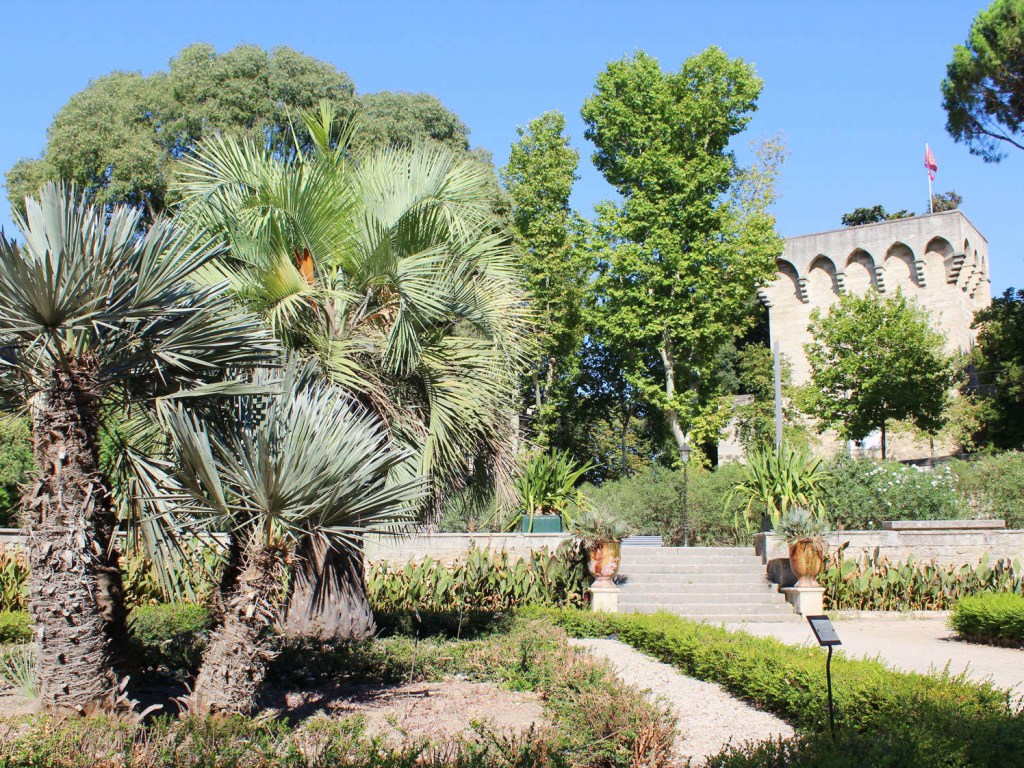
This same friend also introduced me for the first time to Le Jardin des Plantes in Montpellier, the oldest botanical garden in France (there is another garden of the same name in Paris that was created at a later date). While there are attempts to restore this garden today, the University who owns the garden also contains a herbarium that houses historic specimens that even Linnaeus refers to in his classifications of plant species!
I was already familiar with the Herbaria world (having volunteered at the UC Davis Herbarium at Davis were for college, as well as the UC Berkeley Herbaium where I also volunteered), so given the opportunity to study specimens in such an old collection was quite exciting!! My friend was very concerned at my seemingly cavalier (to his inexperienced eyes) handling specimens that were hundreds of years old. He became uncharacteristically insecure. I was shocked that my self-assured, confident friend said to me “I’m scared of the guy in charge of this place – please be careful!” (as if on cue, that fellow passed our aisle and delivered a withering glare as he did!)
At this point I came to see that not only had Mr. Kovac’s dusty miller identity been confused, but many closely related gray leafed Centaurea species were also confused with each other for centuries!! Seriously?! Wow!
I was able to find a specimen in this ancient herbarium that gave me a new lead on discovering Mr. Kovac’s dusty miller’s true identify – Centaurea ragusina!
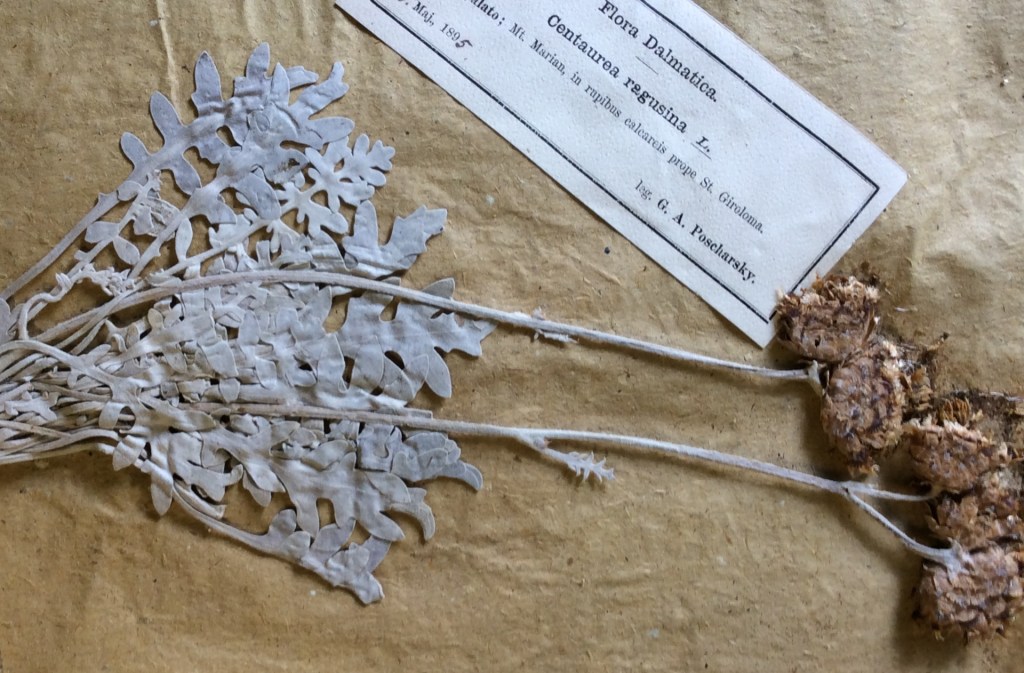
Centaurea ragusina, a native of Croatia, had been documented for more than 100 years, but as there were many other, similar plants, growing in the same types of habitats around the Mediterranean Sea – often on inaccessible cliffs – broad assumptions seem to have been made about their identity. I can recall questioning a Botanist here at home about this issue and still recall his response: “Science is not about KNOWING the truth, but it is all about SEARCHING for it!” This is still very true in our supposed ‘information age’ where inaccurate information far outweighs that which is well researched and carefully presented.
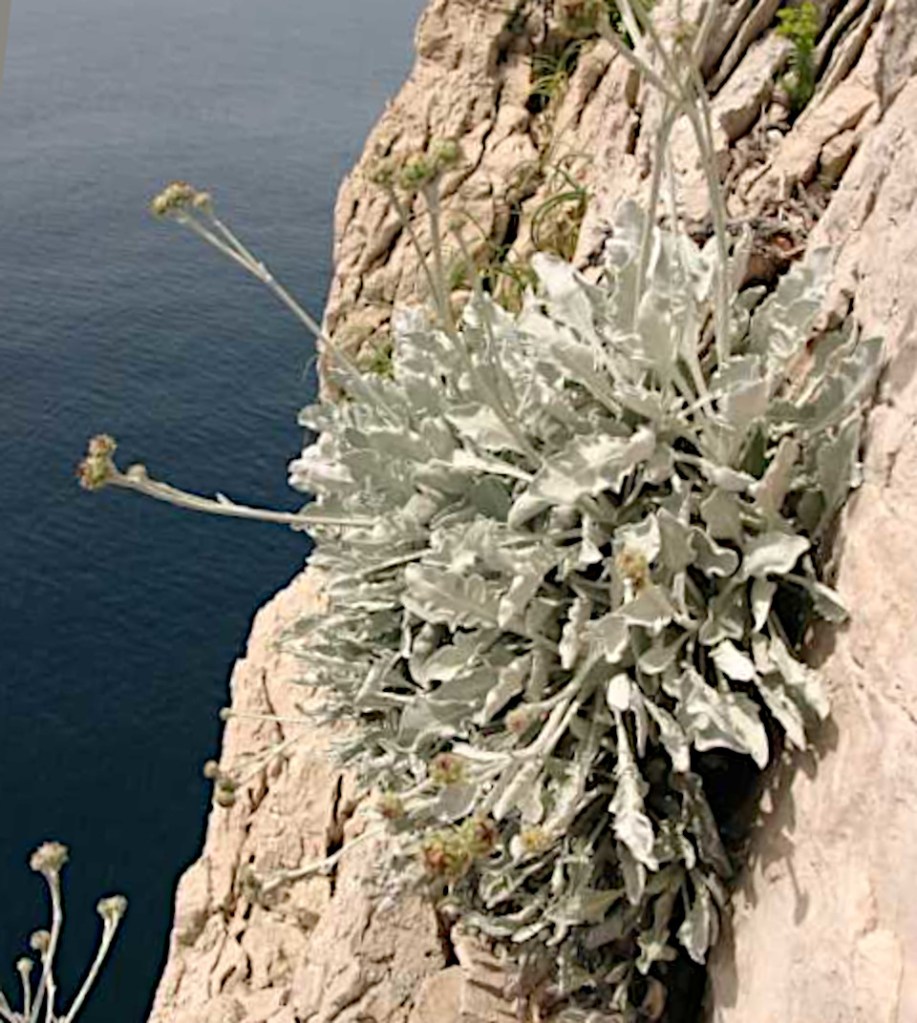
As I revisited my notes and memories, I recalled Maria Kovac (see PART I) mention that her husband’s mother had called this plant “zeh-see-nahs” and there was mention of the family coming from Istria. My research at the moment showed me that Istria is in Croatia, and the Croatian common name for this native plant is Dubrovačka zečina (Dubrovnik cornflower). [This information is fairly easy to find today using internet search engines, but at the time it required turning actual pages in books and conversations with research Librarians, who, BTW, are still excited to be asked a question they have never heard before!]
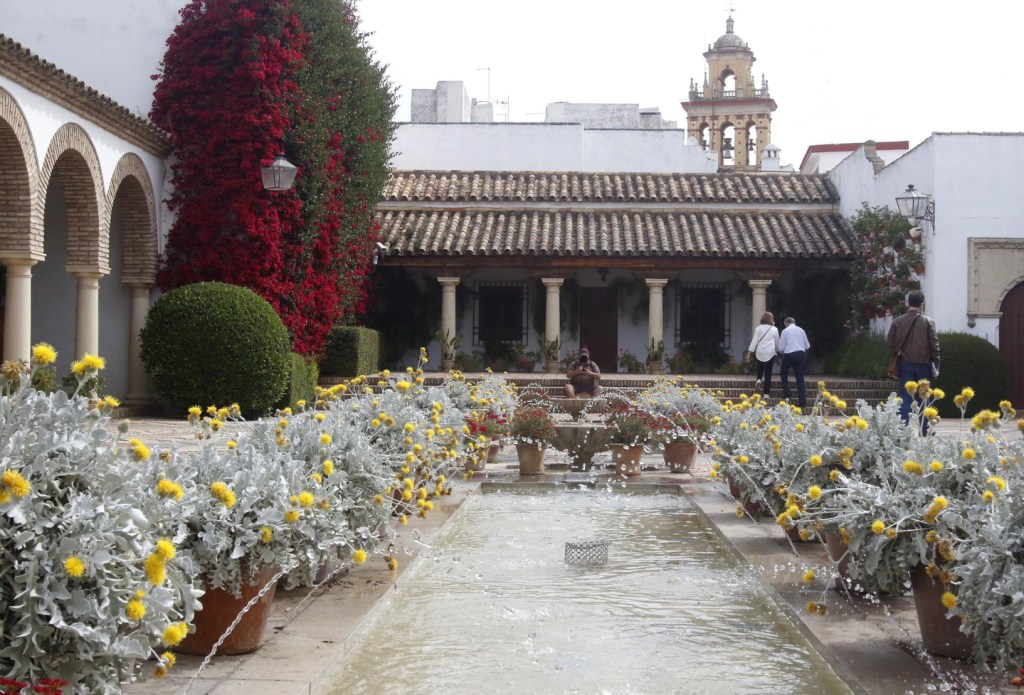
One example of the confusion is the famous potted Centaureas of the historic Palacio de Viana in Córdoba, Spain. Someday I hope to visit this site, but there are many examples of their potted C. ragusinas that can be seen on the Internet. As it is a historic garden, much care is given to maintaining what was there in the past. Our gray leafed plant seems to have center-stage in a number of the courtyards.
Finding everything I could about this species not only helped me understand it better, but also informed the best horticultural approach. Since then, I have been able to have more success with it and not feel better able to provide what it needs in our new garden (we transplanted all our plants to this new house in late 2021).
Feeling it was useful to share the information I had learned, I created a plant profile page for C. ragusina on the old gimcw.org website, which I have recently edited and placed on this blog.
This article continues with PART III …
Resources & Links
(*Information retrieval date for the URL mentioned)
Mr. Kova’s dusty Miller PART I, Mr. Kovac’s dusty miller – Part III (on this blog)
Sunset Western Garden Book, 1935-2001, www.sunset.com/marketplace/sunset-western-garden-book-timeline, (*October, 2004)
Jacobaea maritima, gimcw.org/2025/05/14/jacobaea-maritima/ (on this blog)
Le site du Jardin des Plantes de Montpellier, facmedecine.umontpellier.fr/jardin-des-plantes/, (*March, 2014)
Centaurea ragusina, gimcw.org/2024/09/14/centaurea-ragusina/ (on this blog)
Placio de Viana, Córdoba, Spain, www.palaciodeviana.com/, (*January, 2012)

